 Add to Chrome
 Add to Firefox
 Add to Edge
LamPO: A Lambda Style Policy Optimization for Reasoning Language Models
May 20, 2026
Reinforcement learning with verifiable rewards (RLVR) has become an effective paradigm for improving reasoning language models on tasks such as mathematics, coding, and scientific question answering. However, widely used group-relative objectives, such as GRPO, summarize each sampled group with scalar statistics and therefore discard fine-grained relational information among candidate responses. This weakens credit assignment under sparse outcome rewards, especially when multiple generated solutions differ only subtly in reasoning quality. We propose \textbf{LamPO}, a \textbf{Lambda-Style Policy Optimization} method that replaces scalar group advantages with a \emph{Pairwise Decomposed Advantage}. LamPO aggregates pairwise reward gaps within each response group and modulates each comparison by a confidence-aware weight computed from sequence log-probability differences, while retaining the critic-free and clipped-update structure of PPO-style optimization. When reference solutions are available, we further add a lightweight ROUGE-L-based dense auxiliary reward to reduce reward sparsity. Experiments on AIME24, AIME25, MATH-500, and GPQA-Diamond with Qwen3-1.7B, Qwen3-4B, and Phi-4-mini show that LamPO consistently improves over GRPO and recent RLVR variants, with more stable training dynamics and better sample efficiency.

LambdaPO: A Lambda Style Policy Optimization for Reasoning Language Models
May 19, 2026Group Relative Policy Optimization(GRPO) has become a cornerstone of modern reinforcement learning alignment, prized for its efficacy in foregoing an explicit value-critic by leveraging reward normalization across sampled trajectory cohorts. However, the method's reliance on a monolithic statistical baseline, such as the group mean, collapses the relational topology of the trajectory space into a single scalar, thereby erasing the fine-grained preference information essential for navigating complex, rank-sensitive reward landscapes. To address this issue, we introduce a novel framework, Lambda Policy Optimization (LambdaPO), that addresses this information-theoretic bottleneck by re-conceptualizing advantage estimation from a scalar value to a decomposed, pairwise preference structure. Specifically, the advantage for any given trajectory is formulated as the integrated sum of reward differentials against all peers in its cohort, where each pairwise comparison is dynamically attenuated by the policy's own probabilistic confidence in the established preference. To further mitigate the sparsity of binary outcome supervision, we augment the objective with a semantic density reward, derived from the precision-recall alignment between generated reasoning traces and ground-truth solutions. As a result, our method can mine more fine-grained optimization signals from a group of rollouts, guiding the LLM to a better optima. Experimental results across challenging math reasoning and question-answering tasks demonstrates that LambdaPO improves performance compared to the baseline methods.
DataClaw: A Process-Oriented Agent Benchmark for Exploratory Real-World Data Analysis
May 04, 2026Evaluating autonomous data analysis agents requires testing their ability to perform exploratory analysis in underexplored data environments. However, many existing benchmarks emphasize final answer accuracy in prior-guided data settings and provide limited support for reasoning process evaluation. We introduce DataClaw, a process-oriented benchmark for exploratory real-world data analysis. DataClaw contains approximately 2.06 million real-world records across enterprise, industry and policy domains, with native data noise preserved. It further includes 492 cross-domain tasks derived from think-tank consulting scenarios, each annotated with intermediate milestones for process-level evaluation. These annotations allow DataClaw to measure how far an agent progresses and where its reasoning breaks down. Experiments with eight advanced LLMs show that current agents remain far from reliable in this setting, with seven models achieving below 50% overall accuracy. Process analysis further reveals partial progress hidden behind wrong answers and distinct exploration strategies across models. Overall, DataClaw provides a less data constrained diagnostic testbed for probing the capability boundaries of autonomous data-analysis agents.
Uni-Animator: Towards Unified Visual Colorization
Feb 26, 2026We propose Uni-Animator, a novel Diffusion Transformer (DiT)-based framework for unified image and video sketch colorization. Existing sketch colorization methods struggle to unify image and video tasks, suffering from imprecise color transfer with single or multiple references, inadequate preservation of high-frequency physical details, and compromised temporal coherence with motion artifacts in large-motion scenes. To tackle imprecise color transfer, we introduce visual reference enhancement via instance patch embedding, enabling precise alignment and fusion of reference color information. To resolve insufficient physical detail preservation, we design physical detail reinforcement using physical features that effectively capture and retain high-frequency textures. To mitigate motion-induced temporal inconsistency, we propose sketch-based dynamic RoPE encoding that adaptively models motion-aware spatial-temporal dependencies. Extensive experimental results demonstrate that Uni-Animator achieves competitive performance on both image and video sketch colorization, matching that of task-specific methods while unlocking unified cross-domain capabilities with high detail fidelity and robust temporal consistency.
Smooth Dynamic Cutoffs for Machine Learning Interatomic Potentials
Jan 29, 2026Machine learning interatomic potentials (MLIPs) have proven to be wildly useful for molecular dynamics simulations, powering countless drug and materials discovery applications. However, MLIPs face two primary bottlenecks preventing them from reaching realistic simulation scales: inference time and memory consumption. In this work, we address both issues by challenging the long-held belief that the cutoff radius for the MLIP must be held to a fixed, constant value. For the first time, we introduce a dynamic cutoff formulation that still leads to stable, long timescale molecular dynamics simulation. In introducing the dynamic cutoff, we are able to induce sparsity onto the underlying atom graph by targeting a specific number of neighbors per atom, significantly reducing both memory consumption and inference time. We show the effectiveness of a dynamic cutoff by implementing it onto 4 state of the art MLIPs: MACE, Nequip, Orbv3, and TensorNet, leading to 2.26x less memory consumption and 2.04x faster inference time, depending on the model and atomic system. We also perform an extensive error analysis and find that the dynamic cutoff models exhibit minimal accuracy dropoff compared to their fixed cutoff counterparts on both materials and molecular datasets. All model implementations and training code will be fully open sourced.
Two Heads are Better than One: Distilling Large Language Model Features Into Small Models with Feature Decomposition and Mixture
Nov 11, 2025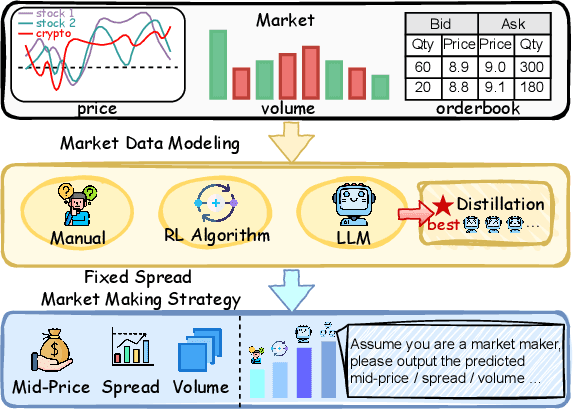

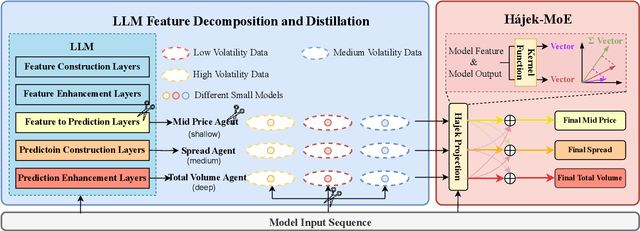
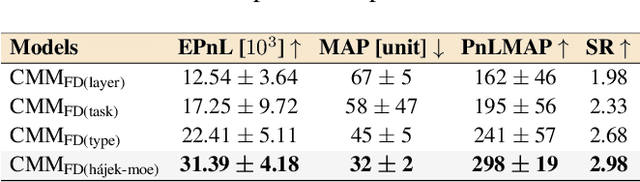
Market making (MM) through Reinforcement Learning (RL) has attracted significant attention in financial trading. With the development of Large Language Models (LLMs), more and more attempts are being made to apply LLMs to financial areas. A simple, direct application of LLM as an agent shows significant performance. Such methods are hindered by their slow inference speed, while most of the current research has not studied LLM distillation for this specific task. To address this, we first propose the normalized fluorescent probe to study the mechanism of the LLM's feature. Based on the observation found by our investigation, we propose Cooperative Market Making (CMM), a novel framework that decouples LLM features across three orthogonal dimensions: layer, task, and data. Various student models collaboratively learn simple LLM features along with different dimensions, with each model responsible for a distinct feature to achieve knowledge distillation. Furthermore, CMM introduces an Hájek-MoE to integrate the output of the student models by investigating the contribution of different models in a kernel function-generated common feature space. Extensive experimental results on four real-world market datasets demonstrate the superiority of CMM over the current distillation method and RL-based market-making strategies.
NeuralTouch: Neural Descriptors for Precise Sim-to-Real Tactile Robot Control
Oct 23, 2025Grasping accuracy is a critical prerequisite for precise object manipulation, often requiring careful alignment between the robot hand and object. Neural Descriptor Fields (NDF) offer a promising vision-based method to generate grasping poses that generalize across object categories. However, NDF alone can produce inaccurate poses due to imperfect camera calibration, incomplete point clouds, and object variability. Meanwhile, tactile sensing enables more precise contact, but existing approaches typically learn policies limited to simple, predefined contact geometries. In this work, we introduce NeuralTouch, a multimodal framework that integrates NDF and tactile sensing to enable accurate, generalizable grasping through gentle physical interaction. Our approach leverages NDF to implicitly represent the target contact geometry, from which a deep reinforcement learning (RL) policy is trained to refine the grasp using tactile feedback. This policy is conditioned on the neural descriptors and does not require explicit specification of contact types. We validate NeuralTouch through ablation studies in simulation and zero-shot transfer to real-world manipulation tasks--such as peg-out-in-hole and bottle lid opening--without additional fine-tuning. Results show that NeuralTouch significantly improves grasping accuracy and robustness over baseline methods, offering a general framework for precise, contact-rich robotic manipulation.
MIRA: Medical Time Series Foundation Model for Real-World Health Data
Jun 09, 2025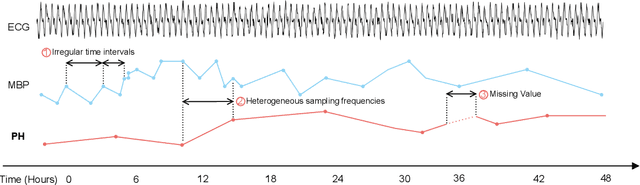

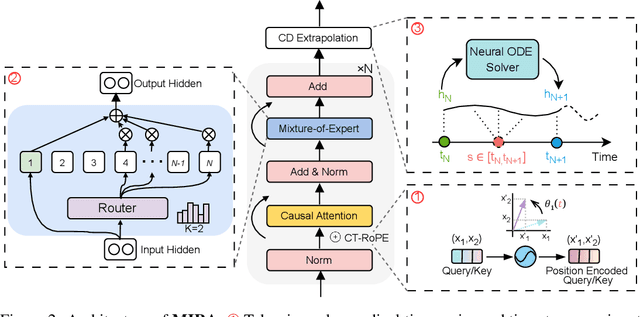
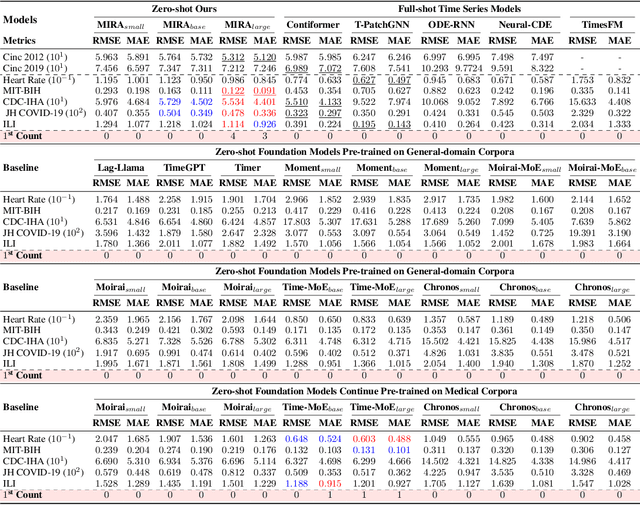
A unified foundation model for medical time series -- pretrained on open access and ethics board-approved medical corpora -- offers the potential to reduce annotation burdens, minimize model customization, and enable robust transfer across clinical institutions, modalities, and tasks, particularly in data-scarce or privacy-constrained environments. However, existing generalist time series foundation models struggle to handle medical time series data due to their inherent challenges, including irregular intervals, heterogeneous sampling rates, and frequent missing values. To address these challenges, we introduce MIRA, a unified foundation model specifically designed for medical time series forecasting. MIRA incorporates a Continuous-Time Rotary Positional Encoding that enables fine-grained modeling of variable time intervals, a frequency-specific mixture-of-experts layer that routes computation across latent frequency regimes to further promote temporal specialization, and a Continuous Dynamics Extrapolation Block based on Neural ODE that models the continuous trajectory of latent states, enabling accurate forecasting at arbitrary target timestamps. Pretrained on a large-scale and diverse medical corpus comprising over 454 billion time points collect from publicly available datasets, MIRA achieves reductions in forecasting errors by an average of 10% and 7% in out-of-distribution and in-distribution scenarios, respectively, when compared to other zero-shot and fine-tuned baselines. We also introduce a comprehensive benchmark spanning multiple downstream clinical tasks, establishing a foundation for future research in medical time series modeling.
Two-way Evidence self-Alignment based Dual-Gated Reasoning Enhancement
May 22, 2025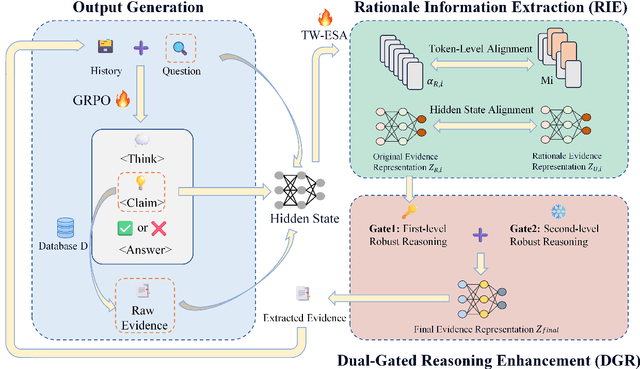
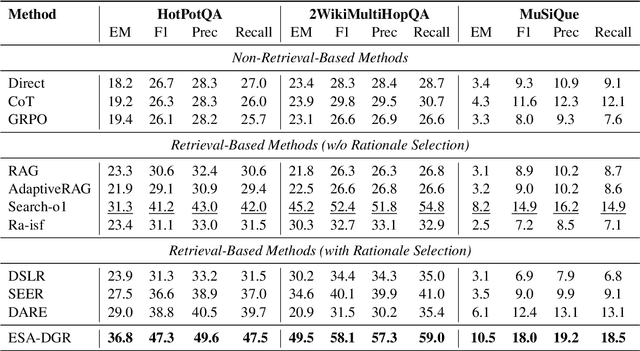
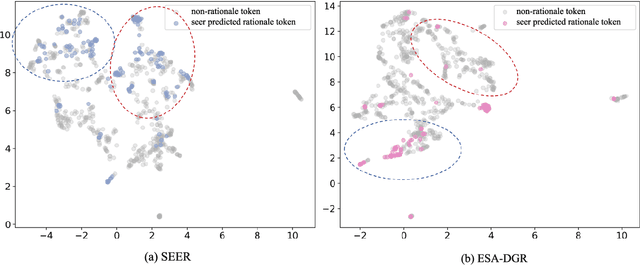
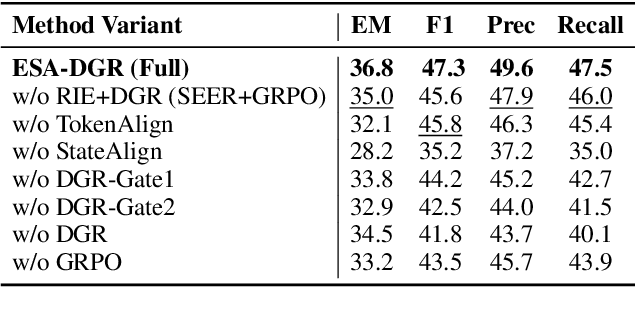
Large language models (LLMs) encounter difficulties in knowledge-intensive multi-step reasoning (KIMSR) tasks. One challenge is how to effectively extract and represent rationale evidence. The current methods often extract semantically relevant but logically irrelevant evidence, resulting in flawed reasoning and inaccurate responses. We propose a two-way evidence self-alignment (TW-ESA) module, which utilizes the mutual alignment between strict reasoning and LLM reasoning to enhance its understanding of the causal logic of evidence, thereby addressing the first challenge. Another challenge is how to utilize the rationale evidence and LLM's intrinsic knowledge for accurate reasoning when the evidence contains uncertainty. We propose a dual-gated reasoning enhancement (DGR) module to gradually fuse useful knowledge of LLM within strict reasoning, which can enable the model to perform accurate reasoning by focusing on causal elements in the evidence and exhibit greater robustness. The two modules are collaboratively trained in a unified framework ESA-DGR. Extensive experiments on three diverse and challenging KIMSR datasets reveal that ESA-DGR significantly surpasses state-of-the-art LLM-based fine-tuning methods, with remarkable average improvements of 4% in exact match (EM) and 5% in F1 score. The implementation code is available at https://anonymous.4open.science/r/ESA-DGR-2BF8.
TarDiff: Target-Oriented Diffusion Guidance for Synthetic Electronic Health Record Time Series Generation
Apr 24, 2025Synthetic Electronic Health Record (EHR) time-series generation is crucial for advancing clinical machine learning models, as it helps address data scarcity by providing more training data. However, most existing approaches focus primarily on replicating statistical distributions and temporal dependencies of real-world data. We argue that fidelity to observed data alone does not guarantee better model performance, as common patterns may dominate, limiting the representation of rare but important conditions. This highlights the need for generate synthetic samples to improve performance of specific clinical models to fulfill their target outcomes. To address this, we propose TarDiff, a novel target-oriented diffusion framework that integrates task-specific influence guidance into the synthetic data generation process. Unlike conventional approaches that mimic training data distributions, TarDiff optimizes synthetic samples by quantifying their expected contribution to improving downstream model performance through influence functions. Specifically, we measure the reduction in task-specific loss induced by synthetic samples and embed this influence gradient into the reverse diffusion process, thereby steering the generation towards utility-optimized data. Evaluated on six publicly available EHR datasets, TarDiff achieves state-of-the-art performance, outperforming existing methods by up to 20.4% in AUPRC and 18.4% in AUROC. Our results demonstrate that TarDiff not only preserves temporal fidelity but also enhances downstream model performance, offering a robust solution to data scarcity and class imbalance in healthcare analytics.